AAPL: To Buy and To Hold

Apple Inc (AAPL) shares have hit an all-time high of $600.01/ share (before closing for the day at $585.56/ share), giving the company a $545 billion valuation, making it the largest company in the world in terms of market capitalization. This happened right after the first batch of “the new iPad” was sold in Australia (from telecom company Telstra’s stores); soon to be followed by sales in Japan, Germany and the US, from retailers like WalMart, Best Buy & Radio Shack apart from Apple’s own Apple Stores.

The company shares reached $500/ share only a month back and the share price has jumped 44% this year alone.

Apple could be valued even higher, according to Morgan Stanley Analyst Ms. Kathryn Huberty, who revised her target price from $515 to $720, predicting that the company would go to $960 (or higher) on a $80 Earnings Per Share (EPS) in 2013. This is based on a Price-Earning Ratio (P/E) of 12, which is at the lower end of Apple’s historical forward P/E (currently at approx. 17). Morgan Stanley is not the only firm revising their prices upwards, earlier Piper Jaffray and recently OppenheimerUBS also have revised their target prices for AAPL. I am sure, others institutions will soon follow suit. IF Ms. Huberty’s price predictions for 2013 come true, that would give Apple Inc. a market valuation to the tune of a mythical $1 trillion!

Continue reading →

Publicly Quitting Goldman Sachs: Uproar on Wall Street

Wall Street is in a whirlwind after disgruntled Goldman Sachs executive, Greg Smith, tendered his resignation via the op-ed pages of the New York Times, and in the process, publicly blasted Goldman for betraying its historic culture and putting profits ahead of client interests.

Mr. Smith described himself as an executive director and head of Goldman’s US equity derivatives business in Europe, the Middle East and Africa. According to him, ” the interests of the client continue to be sidelined in the way the firm operates and thinks about making money.” He further adds, “Goldman Sachs today has become too much about shortcuts and not enough about achievement.”

Goldman Sachs wasted no time in rejecting Mr. Smith’s claims. “We disagree with the views expressed, which we don’t think reflect the way we run our business,” a Goldman spokeswoman said. She added, “in our view, we will only be successful if our clients are successful.  This fundamental truth lies at the heart of how we conduct ourselves.” Moreover, Mr. Smith’s position was identified as vice president, a relatively junior position held by thousands of Goldman employees around the world.

Continue reading →

The Late Tribute: Jobs is No More

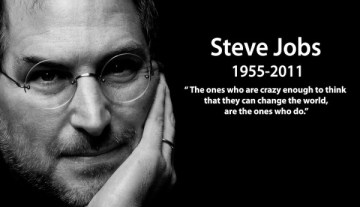
It has been five months since Steve Jobs passed away (February 24, 1955 – October 5, 2011). While the world has moved on from mourning the passage of the maven, not a day passes that some blog, some tech site does not reference his contributions. This will persist for a long time to come – such was the gift, the genius of Jobs.

In an amazing coincidence, I was in the US, in fact, very close to Infinite Loop, Cupertino, California – the HQ of Apple Inc., when news broke of his passing, and had come out of an Apple Store less than an hour back. As a latecomer to the world of iPods, iPhones, Macs, OS X and Apple in general, I was nonetheless swept away by the marvel of Job’s creations, his farsightedness and above all, his boldness in defining what the user experience could be. His death came as a shock in slow motion, increasing in intensity, rather than diminishing.

In an earlier post, I had talked about his life and philosophies a little. Here is just a throwback to the inevitable questions, “Will there be another Steve Jobs?”

My answer, “Never”.

It is the same answer I would give to the question, “Will the world ever stop celebrating the life, times and works of Steve Jobs?”

Apple’s Steve Jobs Quits, AAPL Dips

Steve Jobs has quit as the CEO of Apple Inc (AAPL). His letter read:

To the Apple Board of Directors and the Apple Community:

I have always said if there ever came a day when I could no longer meet my duties and expectations as Apple’s CEO, I would be the first to let you know. Unfortunately, that day has come.

I hereby resign as CEO of Apple. I would like to serve, if the Board sees fit, as Chairman of the Board, director and Apple employee.

As far as my successor goes, I strongly recommend that we execute our succession plan and name Tim Cook as CEO of Apple.

I believe Apple’s brightest and most innovative days are ahead of it. And I look forward to watching and contributing to its success in a new role.

I have made some of the best friends of my life at Apple, and I thank you all for the many years of being able to work alongside you.

Steve

Continue reading →

Cognitive Computing – Computers Thinking like Human Brains

IBM has developed a microprocessor capable of figuratively “rewiring” its connections as it encounters new information, similar to how biological synapses work, thereby emulating the human brain. That is how the system could learn, rather than be programmed.

Synaptic connections between brain cells physically connect themselves depending on experiences. The process of learning is essentially the forming and strengthening of these connections. A computer can simulate such a system by paying more “attention” to important inputs, and paying less attention to others.

Also, the human brain can perform complex tasks rapidly and accurately using “as much energy as a 20 watt light bulb in a space equivalent to a 2 liter soda bottle”.

Continue reading →

We All Fall Down – Stock Markets Tumble

Stocks markets in the US, Europe, South America and the Asia-Pacific are all tumbling, fueled by fears of a global recession.

The outlook for global economic growth appears dim, due to bad news from a number of fronts. In the US, factory activity in the Mid-Atlantic region fell, while US home sales unexpectedly fell in July and new claims for jobless benefits grew more than expected. In Europe, fears that the debt crisis could infect the region’s financial system resurfaced, also US federal and state regulators’ scrutiny of the US arms of Europe’s banks and some European banks’ higher interest rates for US dollar loans, led to worries about spillover of Europe’s debt crisis into the US banking system. The decreasing global consumer demand and markets contagion led to other markets’ falls.

Continue reading →